Understanding Sand Spreading vs. Die Casting: Which Aluminum Shop Technique Fits Your Job?
When contrasting sand casting and die casting for light weight aluminum tasks, a number of crucial variables enter play. Each method has unique attributes that satisfy different manufacturing requirements. Recognizing these differences can greatly impact task results. As one considers elements like production volume and design intricacy, the choice becomes increasingly nuanced. Which approach will ultimately straighten finest with particular job requirements? The response might not be as uncomplicated as it seems.
Review of Sand Spreading
Sand spreading is an extensively utilized steel casting process that utilizes sand as the main mold product. This approach is noteworthy for its flexibility, enabling the production of big components and complex forms. The process begins with producing a mold by compacting sand around a pattern, commonly made from metal or plastic. When the mold and mildew is prepared, molten steel is poured right into the cavity and permitted to strengthen. After cooling down, the sand mold and mildew is escaped to expose the final casting.
One of the considerable advantages of sand casting is its cost-effectiveness, particularly for reduced to medium manufacturing volumes. It fits a variety of steels, including aluminum and iron, making it suitable for varied applications. Furthermore, sand spreading can be adjusted for different sizes and shapes, allowing makers to satisfy specific task needs efficiently. This adaptability makes it a recommended option in sectors such as automobile, aerospace, and building.
Review of Pass Away Casting
Secret Advantages of Sand Casting
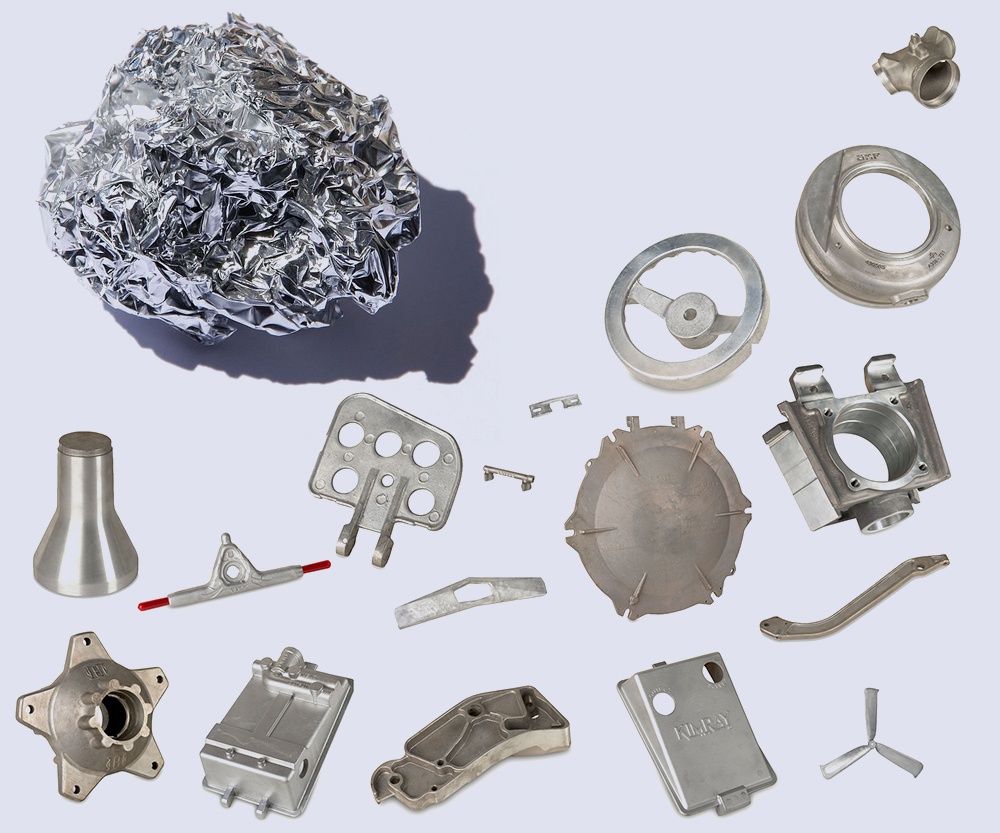
Among the primary benefits of sand spreading lies in its adaptability and cost-effectiveness. This method accommodates a large range of products, including various aluminum alloys, enabling diverse applications in different markets. The simplicity of the sand spreading procedure allows manufacturers to generate complicated forms and sizes without the demand for pricey machining, making it specifically helpful for reduced to tool manufacturing volumes.
The use of sand as a mold product provides excellent thermal properties, promoting the spreading of complex designs with accuracy. The ability to easily produce new molds for different jobs additionally boosts its versatility. In addition, sand casting calls for minimal ahead of time investment in tooling compared to other casting techniques, making it available for smaller ventures. These benefits collectively position sand spreading as a favored choice for her latest blog many suppliers looking for flexibility and economic effectiveness in their production processes.
Trick Advantages of Die Casting
When contrasting casting methods, pass away casting deals unique benefits that deal with high-volume production needs and accurate engineering needs. This technique enables the creation of intricate geometries with tight resistances, which is crucial for industries calling for precise requirements, such as auto and aerospace (Aluminum Foundry). Pass away spreading likewise results in superior surface coatings, lowering the need for extensive post-processing
Furthermore, the process is highly effective; molten metal is injected right into molds at high stress, enabling for quick cycle times and raised production rates. This effectiveness converts right into expense financial savings, making die casting an affordable selection for large-scale production. In enhancement, the longevity of components produced via die spreading ensures their longevity and reliability in various applications. Inevitably, these benefits setting pass away spreading as a leading option for tasks focusing on top quality, effectiveness, and precision in high-volume manufacturing scenarios.
Choosing the Right Approach for Your Project
Just how can a task supervisor determine one of the most appropriate spreading approach for their particular needs? The choice between sand casting and die casting rest on numerous vital factors. Initially, the helpful site job supervisor have to evaluate the necessary volume of parts; die spreading is extra effective for high-volume manufacturing, while sand spreading matches reduced to modest amounts. Next, they must consider the complexity of the style. Detailed geometries frequently favor pass away spreading as a result of its accuracy capabilities, whereas sand casting permits higher versatility in layout adjustments.
Material homes additionally look at here now play a crucial function, as die casting usually creates more powerful elements with remarkable surface area finishes. Expense ramifications, including tooling and material expenses, must be analyzed; sand spreading commonly provides lower first expenses yet can be much less reliable in automation. Inevitably, the task manager ought to weigh these factors versus task timelines, spending plan restraints, and high quality demands to select the ideal approach that lines up with the project's objectives.
Often Asked Questions
What Kinds of Light Weight Aluminum Alloys Appropriate for Sand and Die Casting?
Numerous aluminum alloys are suitable for sand and pass away casting, consisting of 356, 319, and 413 alloys. These choices are favored for their superb castability, mechanical properties, and viability for diverse applications in production.
Exactly How Do Manufacturing Expenses Contrast Between Sand Spreading and Die Casting?
Production prices for sand casting are usually lower as a result of easier setups and products. On the other hand, pass away casting entails higher preliminary expenses from tooling however offers expense financial savings with mass manufacturing, making it extra economical at bigger scales.
Can Both Approaches Produce Complicated Geometries?
What Is the Common Preparation for each and every Casting Method?
Normally, sand spreading preparation vary from one to three weeks, influenced by complexity and volume. In comparison, pass away casting generally uses much faster manufacturing, with preparations frequently between one to two weeks, depending upon layout requirements.
Just How Do Ecological Factors Affect Casting Quality?
Environmental elements, including temperature, dust, and moisture degrees, considerably effect casting high quality. Variations can result in problems such as porosity or surface imperfections, ultimately affecting the mechanical properties and efficiency of the last actors product.
When comparing sand spreading and pass away casting for aluminum projects, numerous essential aspects come into play (aluminum casting). Sand casting is a widely utilized steel casting process that uses sand as the key mold and mildew material. Pass away casting is another noticeable metal casting procedure that offers distinctive advantages compared to sand spreading. The project supervisor should assess the necessary volume of components; die spreading is a lot more effective for high-volume production, while sand spreading suits reduced to moderate amounts. Both sand spreading and die spreading can create intricate geometries, though they accomplish this in various ways